Abstract Submission Deadline
May 28th 2026
Full Paper Submission Deadline (only applied to participants submitting their Full papers for offline Presentation and possible Publication)
August 28th 2026


FPT Conference on Business, Economics and Management (FCBEM 2026) is an academic platform in which professors, researchers, industry experts and practitioners could gather and exchange their insights on business, economics and management and other relevant matters as well as the construction of their publications. The Conference welcomes contributions and submissions of those who have interest in the fields of business, economics and management and the related fields. This year, we are proud to have the presence of three distinguished keynote speakers with solid background and wide experience of these majors.
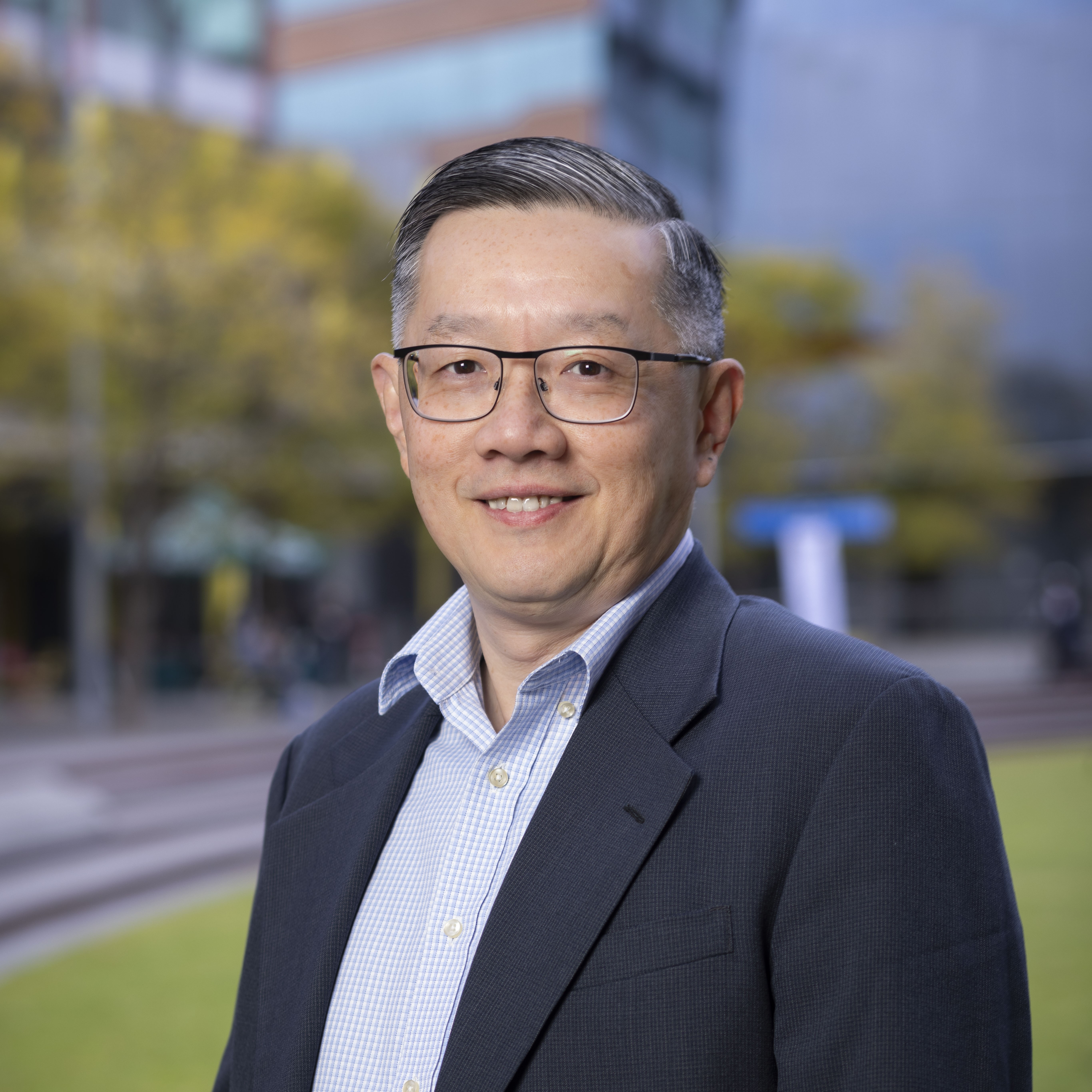
Monash Business School, Monash University
Hean Tat Keh is Professor of Marketing at Monash Business School, Monash University. His current research centers on consumer well-being, with a focus on responsible consumption, healthcare, and services marketing, addressing some of the most pressing challenges in today’s marketplace. His work appears in leading FT50 journals such as Journal of Marketing, Journal of Marketing Research, Journal of Consumer Research, Journal of Consumer Psychology, Journal of the Academy of Marketing Science, and Organizational Behavior and Human Decision Processes. Professor Keh is one of only two recipients of both the ANZMAC Distinguished Marketing Researcher and Educator Awards. He has previously taught at the University of Queensland, Peking University, and the National University of Singapore, and obtained his PhD from the University of Washington, Seattle.
Responsible consumption has become increasingly important in addressing contemporary challenges related to sustainability, wellbeing, public health, and societal resilience. This keynote examines the psychological foundations of responsible consumption and how consumers’ emotions, identities, cultural values, social relationships, spirituality, and connections to nature shape their marketplace behaviors. Drawing on recent research in consumer behavior and marketing, the talk highlights how psychological processes such as awe, pride, self-transcendence, social identity, and moral meaning can encourage or hinder responsible choices. Moving beyond purely economic perspectives, the keynote proposes a human-centered approach to responsible consumption that can contribute to more resilient individuals, organizations, and societies.
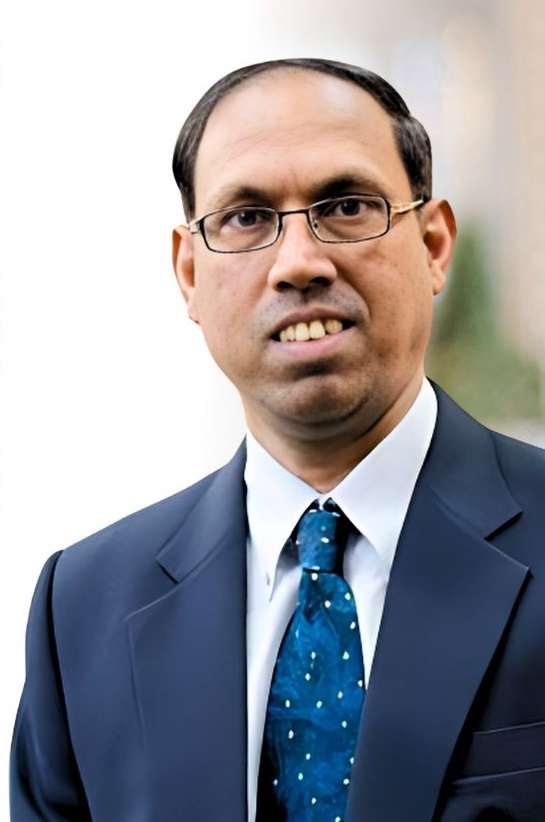
School of Management, Universiti Sains Malaysia
T. Ramayah is currently a Professor of Technology Management, School of Management, Universiti Sains Malaysia, Visiting Professor at Daffodil International University (DIU) Bangladesh, Faculty of Economics and Business Universitas Indonesia (FEB-UI), Indonesia, Faculty of Economics and Business, Universiti Malaysia Sarawak (UNIMAS), Honorary Professor at the University of Jordan and Adjunct Professor at Sohar University (SU), Oman, University Center for Research & Development (UCRD), Chandigarh University (CU), India, Sunway University, Azman Hashim International Business School, Universiti Teknologi Malaysia (UTM) and Faculty of Business Management, AIMST University, Malaysia and Senior Research Fellow at Asia Pacific University of Technology & Innovation (APU). He was also a Visiting Professor at King Saud University (Kingdom of Saudi Arabia), Minjiang University (China), and Adjunct Professor at Multimedia University, Universiti Tunku Abdul Rahman (UTAR), Fakulti Ekonomi dan Pengurusan, Universiti Kebangsaan Malaysia (UKM), and Universiti Tenaga Nasional (UNITEN), Malaysia previously. He has an h-index of 136 and citation of 81,952 in Google Scholar and i-10 index of 675; his h-index in SCOPUS is 83, with 29,097 citations while his h-index in Clarivate/ISI is 67 with 17,816 citations. His full profile can be accessed from www.ramayah.com
Rapid advances in artificial intelligence (AI) have impacted all levels of firms and small and medium-sized manufacturing enterprises (SMEs) in Malaysia are not exempted. One of the biggest challenges still faced by SMEs in Malaysia is the substantial pressures in improving their sustainable performance. This study focuses on Malaysian manufacturing SMEs and draws on the Resource-Based View (RBV) to develop and test a dual pathway model to explain sustainable performance through exploitative and explorative innovation as well as the moderating roles of absorptive capacity. Data from 480 SMEs were collected and empirically tested using PLS-SEM. Empirical evidence shows that exploratory and exploitative innovation mediates the relationship between AI Adoption and sustainable performance with the exploitative innovation pathway exhibiting stronger effects as compared to the explorative innovation pathway. Furthermore, absorptive capacity strengthened the AI Adoption and Exploitative innovation relationship but did not play a role in the AI Adoption and Explorative innovation relationship. This offers both practical and theoretical implications for Malaysian manufacturing SMEs to enhance sustainable performance by strengthening AI Adoption and enhancing absorptive capacity.
Keywords: GenAI Adoption, Sustainable Performance, Exploitative Innovation, Explorative Innovation, Dual Pathway, Developing Economy, Resource Based View

Deputy Director General of the Foreign Investment Agency, Ministry of Finance
Personal Information
Full Name: NGUYEN ANH TUAN
Current Position: Deputy Director General of the Foreign Investment Agency, Ministry of Finance
Organization: Foreign Investment Agency, Ministry of Finance
Professional Background: Senior Expert. Master’s Degree in International Economics, Foreign Trade University
Professional Experience & Areas of Expertise
Having been working at the Ministry of Finance (formerly the Ministry of Planning and Investment) since 2002. Leadership and management positions:
• Deputy Chief of Ministry Office and Secretary to the Minister (2014–2016)
• Deputy Director General of the Public Procurement Agency (2016–2022)
• Deputy Director General of the Foreign Investment Agency (2022–present)
Key areas of expertise include: Macroeconomic management; Public procurement management; State management in foreign investment and investment promotion.
Contact Information
Email: [email protected]
Address: Foreign Investment Agency, Ministry of Finance, No. 6–8 Phan Huy Chu Street, Cua Nam Ward, Hanoi, Viet Nam
1. Context
The world is entering a period of profound transformation driven by strategic competition among major economies, the restructuring of global supply chains, digital transformation, green transition, and the Fourth Industrial Revolution. In this context, foreign direct investment (FDI) flows are increasingly shifting toward new criteria, including innovation, high technology, sustainable development, and value-chain resilience. For Vietnam, as the goal of becoming a high-income developed country by 2045 has been established, the challenge is not merely to attract more capital but, more importantly, to develop a national strategic investment platform; attract high-quality FDI through industrial clusters, value chains, and innovation ecosystems; promote technology transfer; and enhance national competitiveness.
2. Purpose
This keynote aims to clarify the role of high-quality FDI in Vietnam’s new growth model while analyzing the requirements, strategic orientations, and necessary conditions for improving the effectiveness of attracting and utilizing FDI in the new development phase. Based on the Party’s major policy directions regarding the foreign-invested sector, science and technology, innovation, the private sector, and the state sector, the presentation will examine and propose solutions for attracting and developing foreign-invested enterprises within the broader national development strategy. These efforts will contribute to shaping new growth models founded on science and technology, innovation, digital transformation, green transition, enhanced strategic autonomy, and the combined strength of all economic sectors to achieve rapid and sustainable development objectives.
3. Key Themes
The presentation focuses on five major themes. First, it identifies emerging trends in global FDI flows and Vietnam’s position in the restructuring of international value chains. Second, it analyzes the requirements for high-quality FDI in line with the Party Central Committee’s resolutions, emphasizing high technology, innovation, digital transformation, green development, and linkages with domestic enterprises. Third, it assesses current challenges, including intensifying competition for investment attraction, limited technological absorption capacity, weak linkages between FDI enterprises and Vietnamese firms, as well as geo-economic and geopolitical uncertainties at both regional and global levels. Fourth, it highlights that institutional quality and human capital will increasingly become decisive factors in Vietnam’s competitiveness in attracting next-generation investment. Fifth, it proposes policy directions and solutions to build a comprehensive and attractive investment ecosystem, strengthen linkages among the FDI sector, the private sector, and the state sector, thereby enhancing growth quality and national economic resilience.
4. Contribution
The presentation offers the perspective that the foreign-invested sector is an integral component of the national economy and serves as one of the key strategic drivers for economic restructuring and growth model transformation. Beyond providing capital, it contributes to technology transfer, human capital development, the growth of Vietnamese enterprises, and deeper participation in global value chains. At the same time, the presentation emphasizes a new development approach based on synergy, connectivity, and spillover effects among the three major economic sectors: the state sector, the private sector, and the foreign-invested sector.
5. Takeaways
The central message of the presentation is that Vietnam should move decisively from a mindset focused primarily on attracting capital to one centered on developing a national strategic investment platform; from investment attraction based on administrative boundaries to attraction based on industrial clusters, value chains, and innovation ecosystems. Priority should be given to quality, efficiency, technology transfer, participation in supply chains, and value-added creation as the principal criteria for investment attraction, while science and technology, innovation, digital transformation, green development, and linkages with domestic enterprises should serve as the core pillars. Participants will gain a comprehensive understanding of emerging opportunities and challenges in FDI attraction, as well as key policy directions and strategic solutions for maximizing the effectiveness of international investment resources, thereby contributing to Vietnam’s aspiration for rapid, sustainable, and prosperous development in the new era.